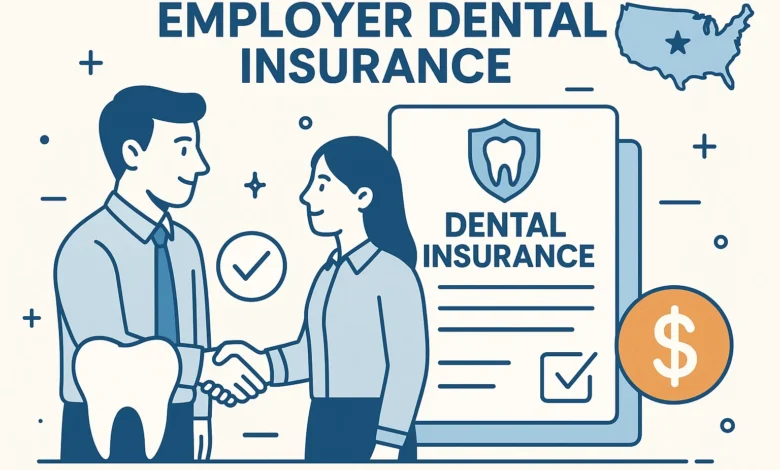
The Ultimate Guide to Employer Dental Insurance in the USA: 2024 Benefits & Options
Do you know that dental insurance is included in the benefits package of almost 90 percent of Fortune 500 companies, but a 2024 survey of National Association of Dental Plans found that about 40 percent of employees do not completely know what they are actually covered by? And you are not alone, with the complicated world of employer dental insurance in the USA. This is a comprehensive guide that will break down and decipher what is indeed in your workplace dental benefits, what they actually cost and how you can best cover them to give you the best oral health and financial benefits.
We are going to unravel the various forms of employer dental insurance plans and the actual employer dental insurance cost form as well as offer actionable measures on the part of the employee as well as the employer. This article will become your ultimate guide in making the best decisions regarding the benefits you are going to receive in relation to your workplace dental cover, whether you are assessing the new job opportunity during the open enrollment, or an HR manager who is seeking to enhance his or her benefits package.
Why Employer-Sponsored Dental Insurance Dominates the US Market
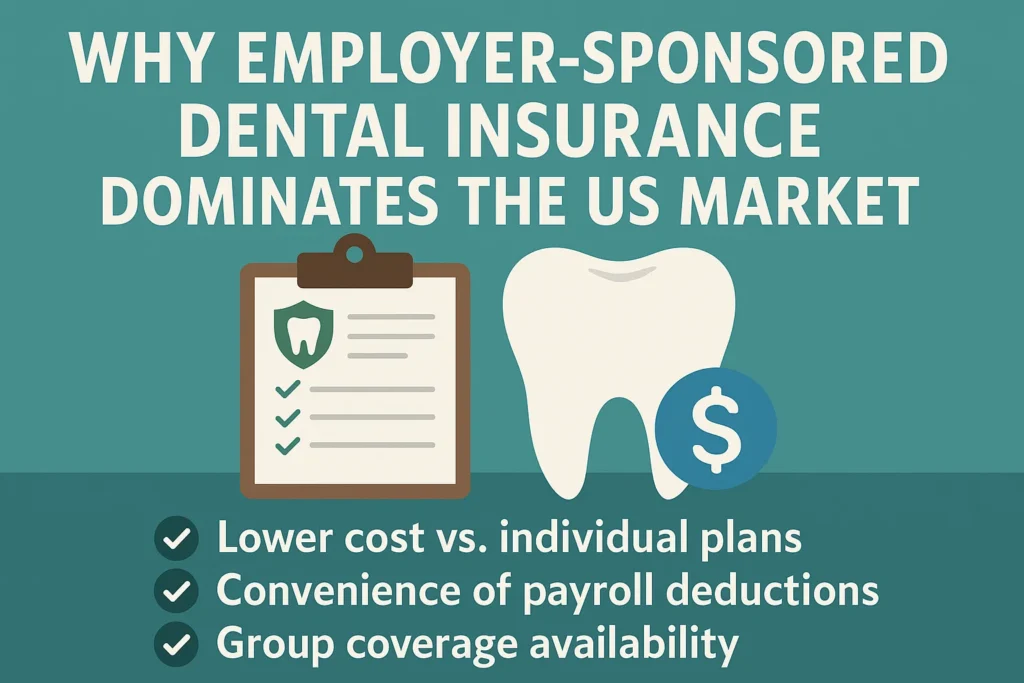
The most popular method of Americans receiving dental protection is through group dental insurance offered by employers. According to the benefits report compiled by the Society of Human Resource Management, 95 percent of large and 67 percent of small businesses provide dental insurance benefits to their workers. This is due to the immense benefits both to the employers and the employees.
For employees, employer insurance for employees dental coverage offers:

- Buying strength through groups: The employer can bargain rates, which are more beneficial than those of individual buyers.
- Pre-tax contribution: Employee contributions are usually done using pre-tax dollars.
- Guaranteed: No pre-existing condition medical underwriting or waiting period.
- Inconvenience: Complex enrollment and payroll deduction.
For employers, offering dental benefits:
- Improves the recruitment and retention within competitive job markets.
- Enhances general health and the productivity of the workforce.
- Minimizes absenteeism because of oral problems.
- Offers tax incentives to the business contributions.
Expert Insight: “Employer based dental insurance is one of the most affordable benefits to both the employer and the employee. The group model transfers risk to a more healthy population, thus maintaining premiums significantly lower than when the individual market plans. This is usually beneficial to the employees, who can have extensive coverage at 30-50% of the price of individual insurance, according to Michael Chen, a benefits consultant with more than 20 years in workplace insurance programs.
Types of Employer Dental Insurance Plans Explained
All dental plans of individuals offered by employers are not created equal. It is important to know the various plan structures in order to maximize your benefits. Most of the employer sponsored plans can be classified into three broad categories:
1. Dental Preferred Provider Organization (DPPO)
The most popular kind of dental insurance that employers offer is DPPO plans. The plans offer a network of dentists who have accepted to offer their services at discounted prices.
How it works: You can see any dentist, but you’ll pay less out-of-pocket when using in-network providers. DPPOs typically have deductibles, coinsurance, and annual maximums.
Pros: Flexibility to see specialists without referrals; broad network options
Cons: Higher out-of-pocket costs when using out-of-network providers
2. Dental Health Maintenance Organization (DHMO)
DHMOs (sometimes called capitation plans) operate on a fixed copayment system rather than coinsurance.
How it works: You pick a network dentist as your main one and make the regular payments depending on the type of services. No deductibles or annual maximums are likely to exist.
Pros: Predictable costs; often lower premiums; no claim forms
Cons: Limited provider choice; no coverage outside the network
3. Indemnity (Fee-for-Service) Plans
These traditional plans offer the greatest flexibility but are becoming less common in employer-sponsored benefits.
How it works: You can see any dentist, and the plan pays a percentage of the “usual, customary and reasonable (UCR)” fee for covered services.
Pros: Maximum choice of providers; no network restrictions
Cons: Highest premiums; may require claim submissions; balance billing possible
Comparison Table: Employer Dental Plan Types
| Feature | DPPO | DHMO | Indemnity |
|---|---|---|---|
| Provider Choice | Any dentist; lower cost in-network | Must use network providers | Any licensed dentist |
| Cost Structure | Deductible + Coinsurance | Copayments per service | Percentage of UCR fee |
| Paperwork | Provider files claims | Little to none | May need to file claims |
| Premiums | Moderate | Lowest | Highest |
| Best For | Those wanting balance of choice and cost | Budget-conscious employees | Those wanting maximum flexibility |
Understanding the True Cost Structure of Employer Dental Insurance
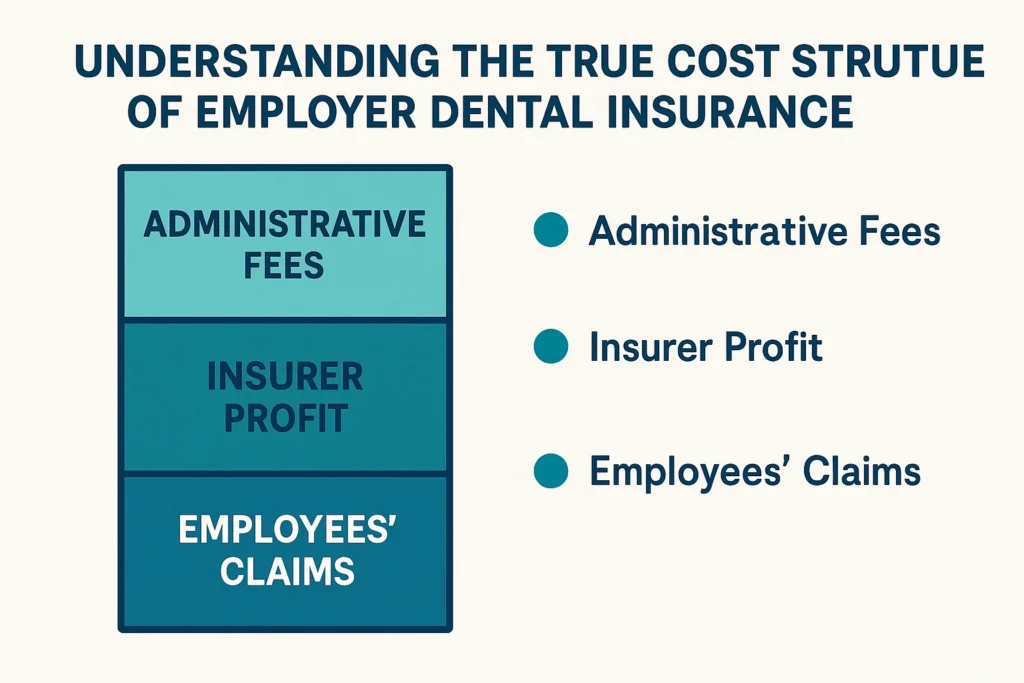
In assessing the price of dental insurance of the employer, one needs to know how the costs are normally divided between the employer and the employee. The model that is commonly applied by most companies is the cost sharing model where the premium costs are shared but the employees will still cover out-of-pocket costs.
Premium Sharing Arrangements
Most employers pay a significant portion of the premium costs for their employees:
- Employee-only coverage: Employers typically cover 70-100% of the premium
- Family coverage: Employers typically cover 50-70% of the premium
For example, if the total monthly premium for family coverage is $150, the employer might pay $90 (60%), leaving the employee responsible for $60 (40%) through payroll deduction.
Out-of-Pocket Costs to Employees
Beyond premiums, employees should anticipate these potential expenses:
- Deductibles: Typically $50-100 per individual, $150-300 per family annually
- Coinsurance: Usually 20-50% of costs after deductible, depending on service type
- Copays: Fixed amounts for specific services (common in DHMOs)
- Annual maximums: Typically $1,000-2,000 per year; the plan won’t pay beyond this amount
Special Considerations: Government and Public Employee Plans
Certain employment sectors have unique dental insurance structures that warrant specific attention.
Federal Employee Dental Insurance
The Federal Employee Dental and Vision Insurance Program (FEDVIP) provides separate dental coverage for federal employees, retirees, and their families. Unlike typical employer plans, FEDVIP:
- Is entirely voluntary and employee-paid (no government contribution)
- Offers nationwide portability of coverage
- Provides multiple plan options from various carriers
- Operates separately from FEHB health insurance
State Employee Dental Insurance
State employee dental insurance programs vary significantly by state but often feature:
- Robust benefits with lower out-of-pocket costs
- Multiple plan options similar to FEDVIP
- Strong provider networks, especially in state capital regions
- For example, NYC employee dental insurance typically offers several PPO options with comprehensive coverage
Maximizing Your Employer Dental Benefits: An Employee’s Guide
Simply having coverage isn’t enough—you need to strategically utilize your benefits to maximize their value.
- Know Your Plan Details: Make sure you know your plan description before you start treatment, so that you know the limit of coverage, waiting period, and exclusion.
- Remain In-Network Providers: Being in-network normally saves you 20-40 percent in out-of-pocket expenses in comparison to out-of-network care.
- Plan Timely: In case of a substantial workload, you should strategically plan treatments over benefit years so that you can maximize your yearly benefits. E.g., suppose that you have a maximum of $1,500 per year and require 3 000 of work, plan half in December and half in January.
- Combine with FSA/ HSA: Pay out of pocket using Flexible Spending Accounts (FSA) or a Health Savings Account (HSA) using pre-tax money, essentially saving 20-40 percent on costs incurred in dental treatments based on your tax bracket.
- Preventive Care: The majority of the plans cover 100% of preventive care such as cleanings, exams, and X-rays. Such visits are able to detect issues at an initial stage when they are simpler and cheaper to cure.
What If You Don’t Have Employer Dental Insurance?
For those without access to employer offered dental benefits, several alternatives exist:
- Individual Dental Insurance: Non employer dental insurance plans are offered either as health care marketplaces or directly offered by insurance companies, but the rates tend to be more expensive than group rates.
- Dental Discount Plans: Dental Discount Plans are not insurance, the plans offer 15-50 percent discount at dentists who are enrolled in the plans at an annual membership fee.
- Public Assistance Programs: Medicaid dental services are not uniformly covered in all states but it could benefit low-income citizens.
- Dental Schools: Dental schools are also accredited, and they tend to offer the care at a very low rate through students who are under a licensed supervision.
MetLife Dental Insurance Coverage: Comprehensive Plans for Affordable Dental Care
Frequently Asked Questions (FAQ)
Can I keep my employer dental insurance if I leave my job?
Generally, dental insurance through employers is canceled in the event of termination of employment. But you can have a choice in the form of COBRA continuation coverage that will enable you to continue your same plan to an 18-36 month period by paying the full premiums plus a small administrative fee. This can be quite costly but can be justified in case of continuous treatment or pre-existing disorders.
Are employee dental plans inclusive of orthodontics?
Other employer plans offer orthodontic coverage, especially to children. The adult orthodontics is less prevalent. Where they exist, orthodontic benefits usually possess a separate lifetime limit (usually 1,000-2,000) and may subject one to waiting periods. Never leave out the detail of your particular plan because plans differ greatly in terms of orthodontic coverage.
What is the difference between the dental benefits and dental insurance?
Dental insurance is a term used to describe the conventional plans of insurance in which a carrier bears the risk. Other employers are providing self-funded dental benefits in which the employer pays claims directly as opposed to paying premiums to an insurance company. In the case of employees, the process can usually be the same, but, self-funded plans can vary in the manner in which they appeal and insurance regulations in the state may not be applicable.
Is it possible to turn down employer and purchase my own dental insurance?
Yes, you will usually be able to reject the employer-paid dental coverage and buy your own. Nevertheless, this is seldom economical in terms of monetary means because employer plans enjoy group rates and frequent employer contributions. Never give up coverage without first comparing the costs and benefits, and making sure that you can get similar coverage on an individual basis, particularly when you have pre-existing conditions.
What is the relationship between dental insurance and Medicare offered by employers?
Routine dental coverage is not included in the original Medicare (Parts A and B). In any case, as long as you have a dental plan (employer or your own or a spouse) covering you, you will have that as your primary dental coverage. After retiring and losing employer coverage, you will be required to find another dental insurance which may be a Medicare Advantage plan which covers dental, a separate dental plan or dental discount plans.
Conclusion: Maximizing the Value of Your Workplace Dental Benefits
It is important to know your employer dental insurance in the USA both to your dental health and your finances. The group plans are one of the most economical alternatives to quality dental care and the subsidies by the employers make it cheap and easy to obtain coverage compared to plans in the individual markets. With the proper knowledge of the structure of your plan, network needs, and cost sharing plans, you can make decisions that will help you to enjoy the maximum benefits with minimum out-of-pocket expenses.
The next thing is to be proactive in utilizing your benefits materials; in particular, when there are open enrollments. Do not automatically renew your past elections. Consider making a review of any plan change, evaluating the dental expectations of your family in the next year and comparing the options that are available. And in case you have any questions, feel free to get in touch with your HR department or benefits administrator. By taking the initiative of learning about your dental benefits as an employee, you are bound to reap maximum out of this valuable benefit in the workplace.

